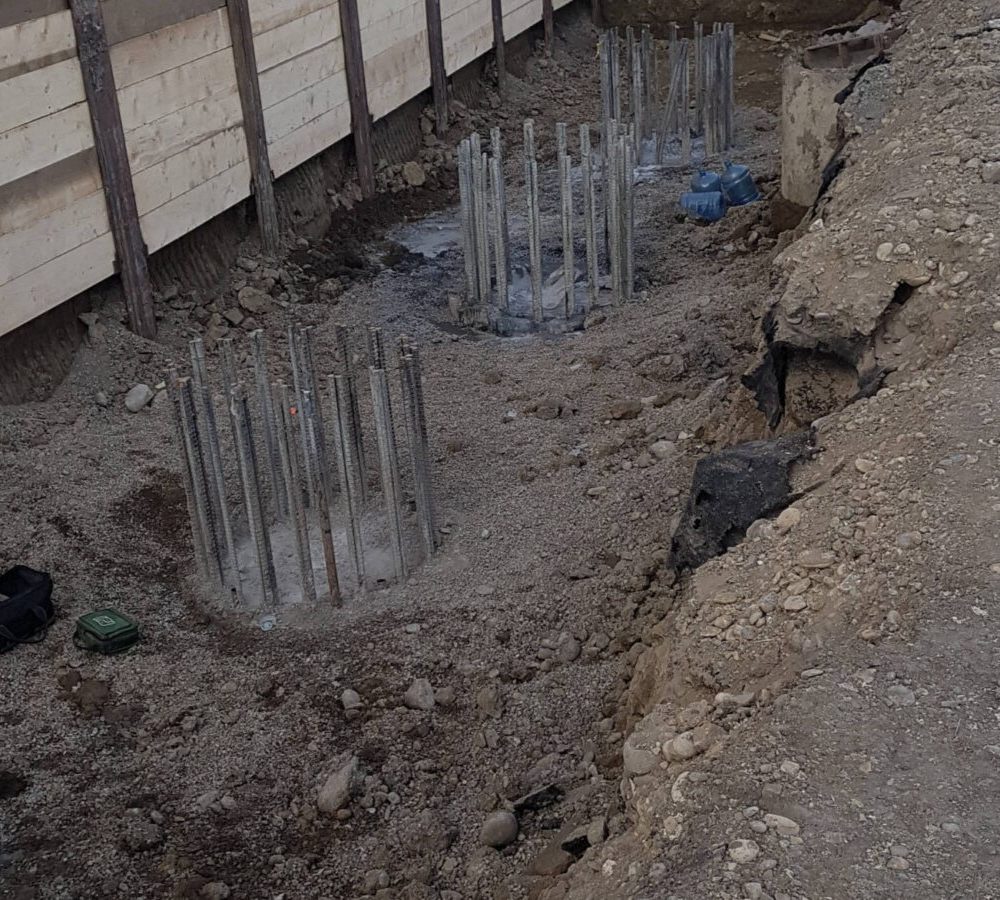
Ensure the integrity of your concrete foundations with Pile Integrity Testing (PIT). This fast, cost-effective, and non-destructive method delivers reliable quality control and depth analysis with portable, cutting-edge equipment.


Ensure the structural soundness of concrete foundations with Pile Integrity Testing (PIT): a fast, nondestructive, and cost-eective method for quality control and aw detection. Conducted in accordance with ASTM D5882-16, PIT uses low-strain impact techniques to evaluate the condition of cast-in-place concrete piles and drilled shafts.
PIT can identify
Why use PIT
PIT is ideal for both new and existing foundations and is a trusted tool in SACL’s suite of geotechnical testing services.
Yes, Pulse Echo Testing (PIT) can be used to verify anomalies detected by Crosshole Sonic Logging (CSL) testing. While CSL provides a detailed assessment of the integrity of drilled shafts and other deep foundations by evaluating the sound wave travel times between pairs of access tubes, PIT offers a complementary method by sending a stress wave down the length of the shaft and analyzing the reflected signals. This can help confirm the presence, location, and extent of anomalies such as voids, inclusions, or cracks identified during CSL testing, providing a more comprehensive evaluation of the foundation’s condition. It is important to note, however, that anomalies at the pile toe are difficult to detect using PIT as they can be masked by the toe reflection.

Yes, bidirectional testing can be performed on bell piles. Bidirectional static load tests (BDSLT) involve installing a load cell within the pile, which applies an upward and downward force simultaneously. This type of testing can accommodate the unique geometry of bell piles, allowing for accurate measurement of their load-bearing capacity and performance under different loading conditions. It is important to note, however, that the pile must have sufficient shaft resistance to counter the end bearing by providing reaction to the bidirectional cell. If this condition is not met, a reaction frame would be needed at the pile head to supplement the shaft resistance.
Yes, PDA testing can help determine the uplift capacity of piles. By analyzing the pile’s response to dynamic loading, PDA testing can estimate the full resistance distribution along the pile which allows the estimation of uplift resistance.
You are about to access data that is maintained on a site external to SACL systems.
Please note that SACL is not responsible for the content, privacy policies, or practices of external sites. By proceeding, you acknowledge that the external site may have different cookie settings and data handling policies.